


Helping Ambetter members connect with a primary care physician (PCP) they actually want to see
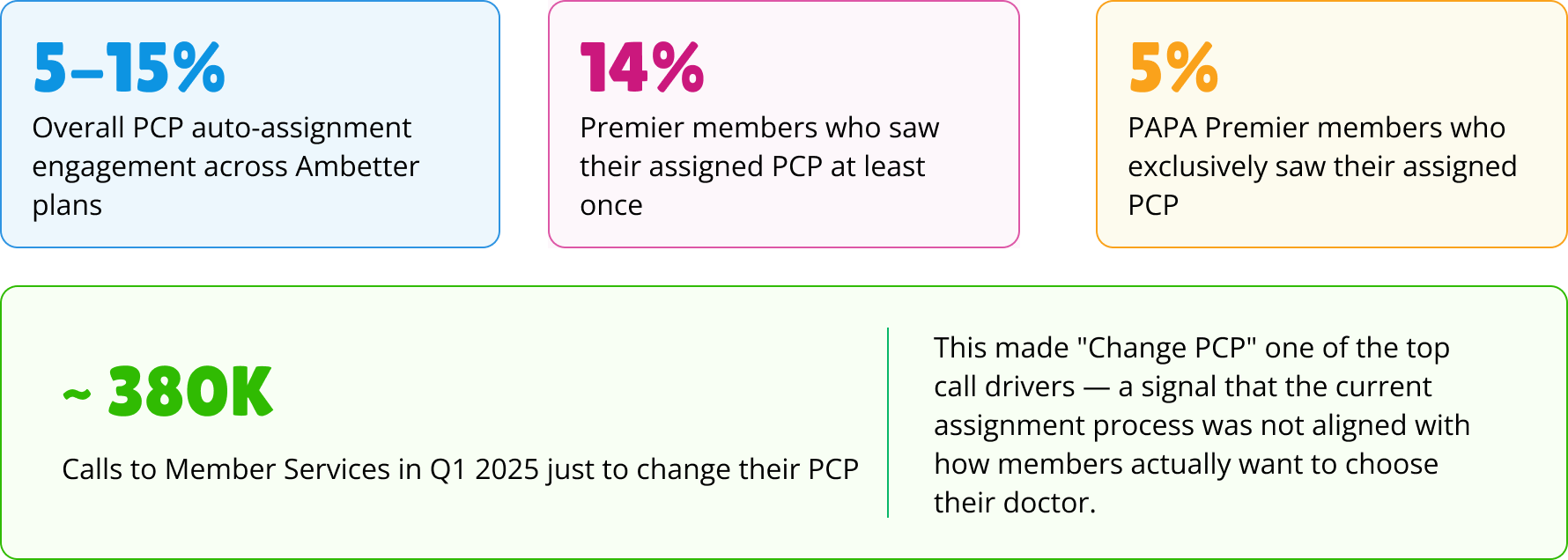
When members enroll in a non-gatekeeper Ambetter plan, a primary care physician is automatically assigned to them. They're never required to visit that doctor — and overwhelmingly, they don't. The assigned PCP rarely matches a member's location, language, or needs, so the relationship never begins.
A self-service experience to help Ambetter health plan members choose a primary care physician they actually want to see — replacing an auto-assignment system that most members quietly ignored.

The numbers that defined the problem
Why this matters
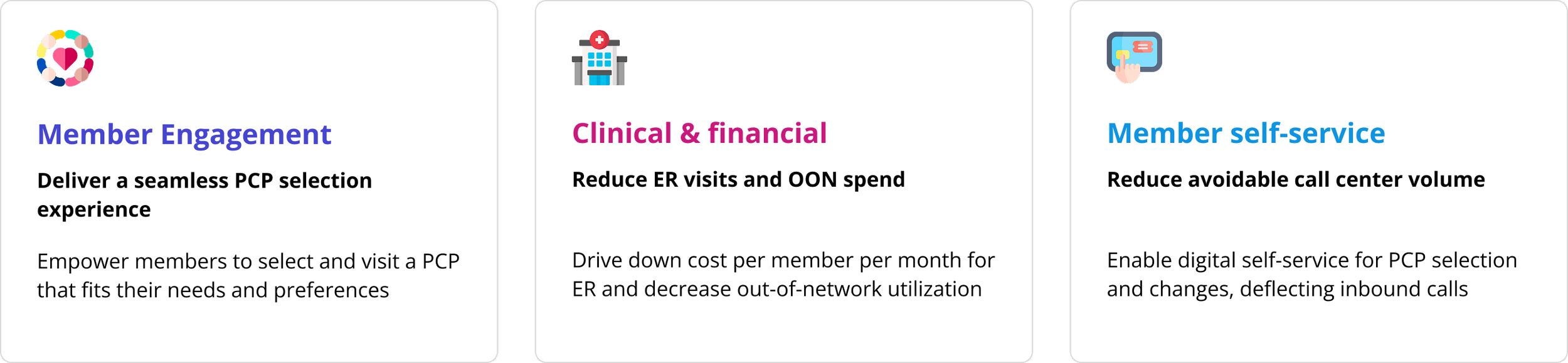
Members on non-gatekeeper plans aren't required to see their assigned PCP — so when the assigned doctor doesn't match their needs, preferences, or location, they simply don't go. The result is missed preventive care, more ER visits, out-of-network spend, and a growing administrative burden on the organization.


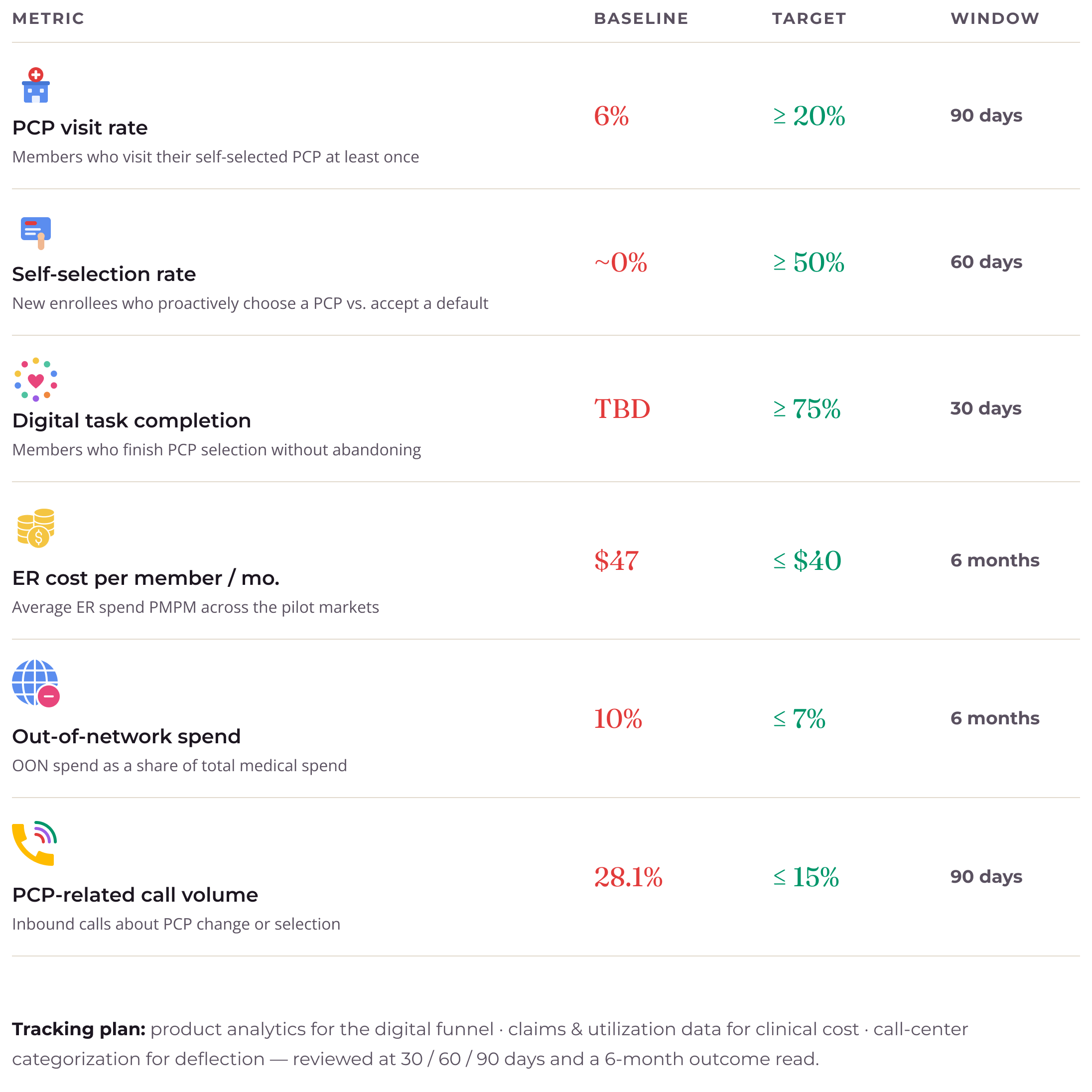
Baseline numbers — where we started


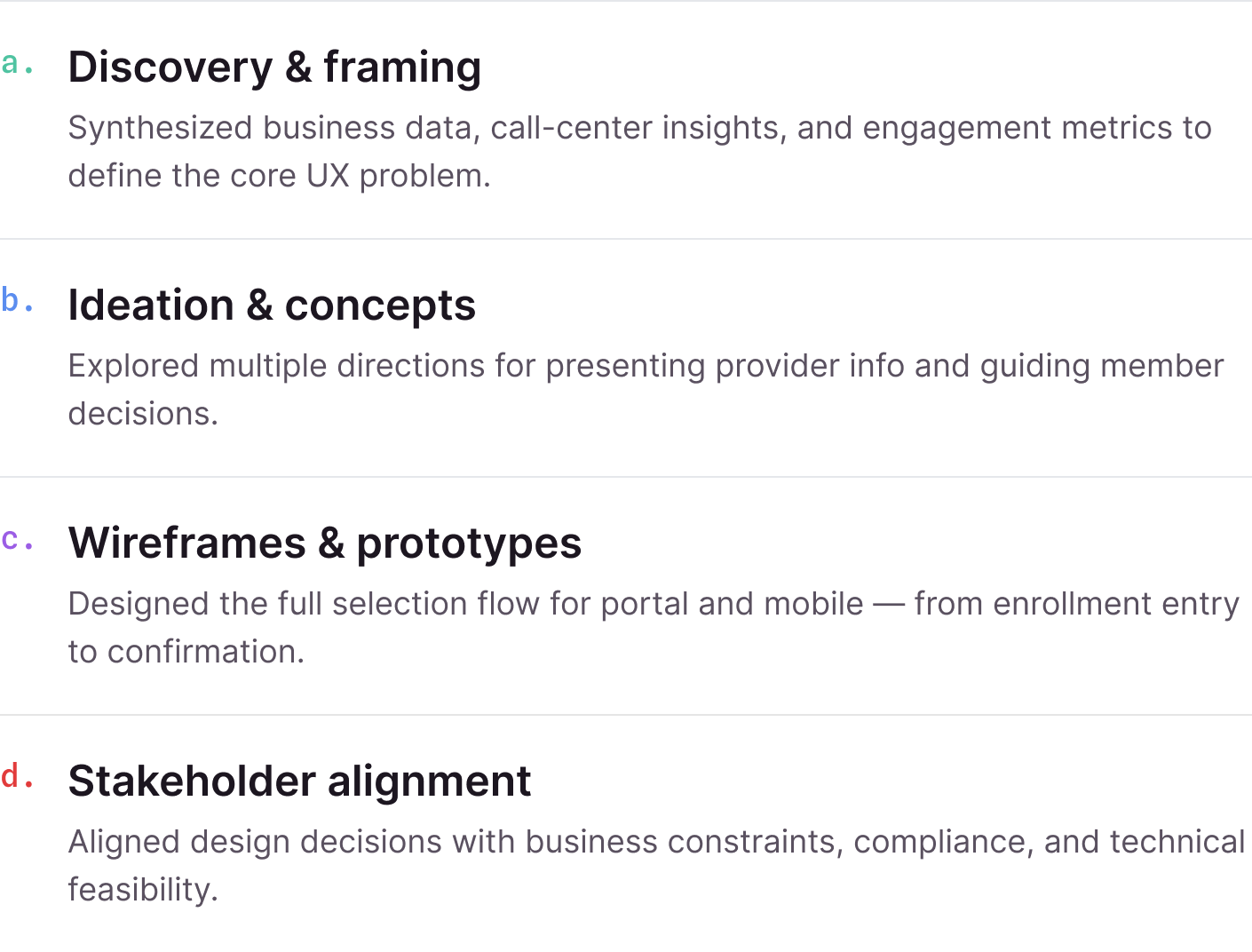


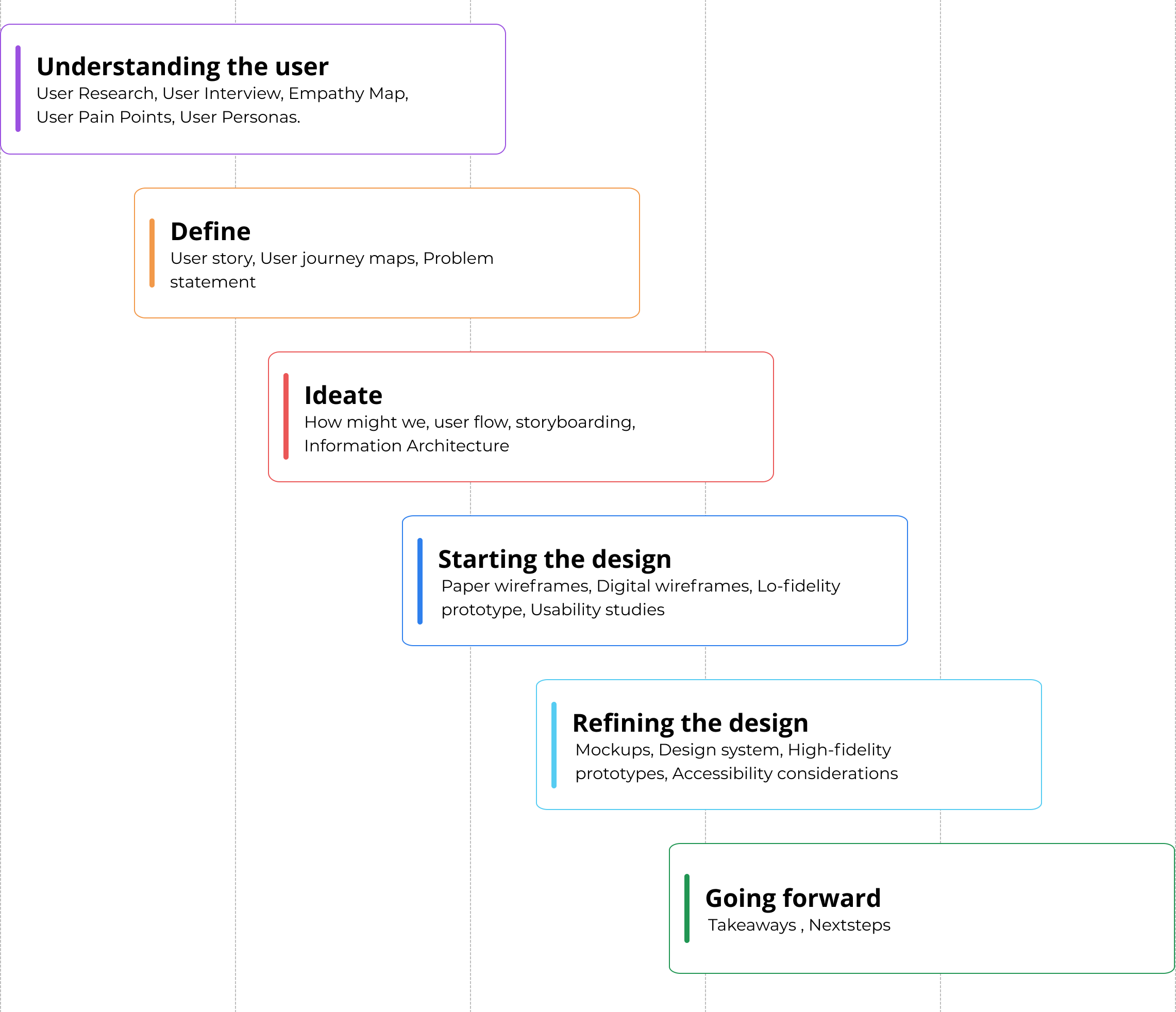
A human-centered process — from framing the problem with real data to defining how success would be measured before a single screen was built.
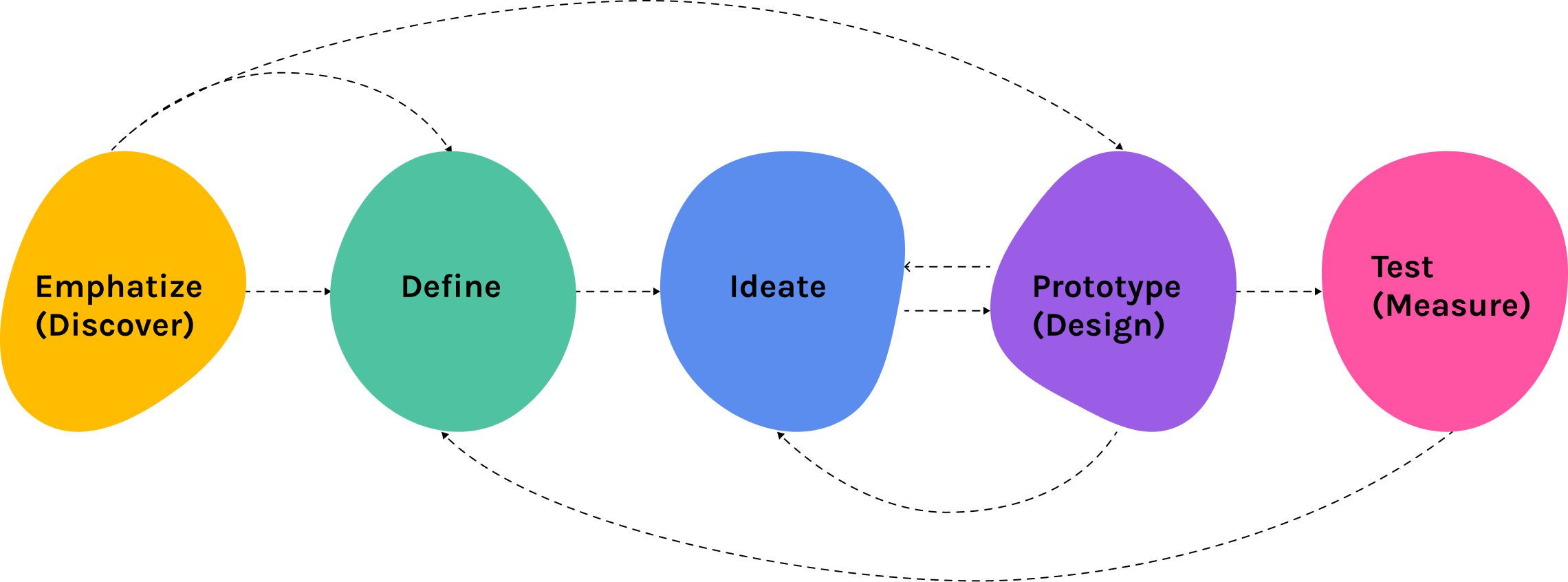


Because this was a 0 → 1 design, I defined how we'd know it worked before writing a single screen. Every metric had a baseline, a target, and a window to hit it — so the design could be proven, not just admired.


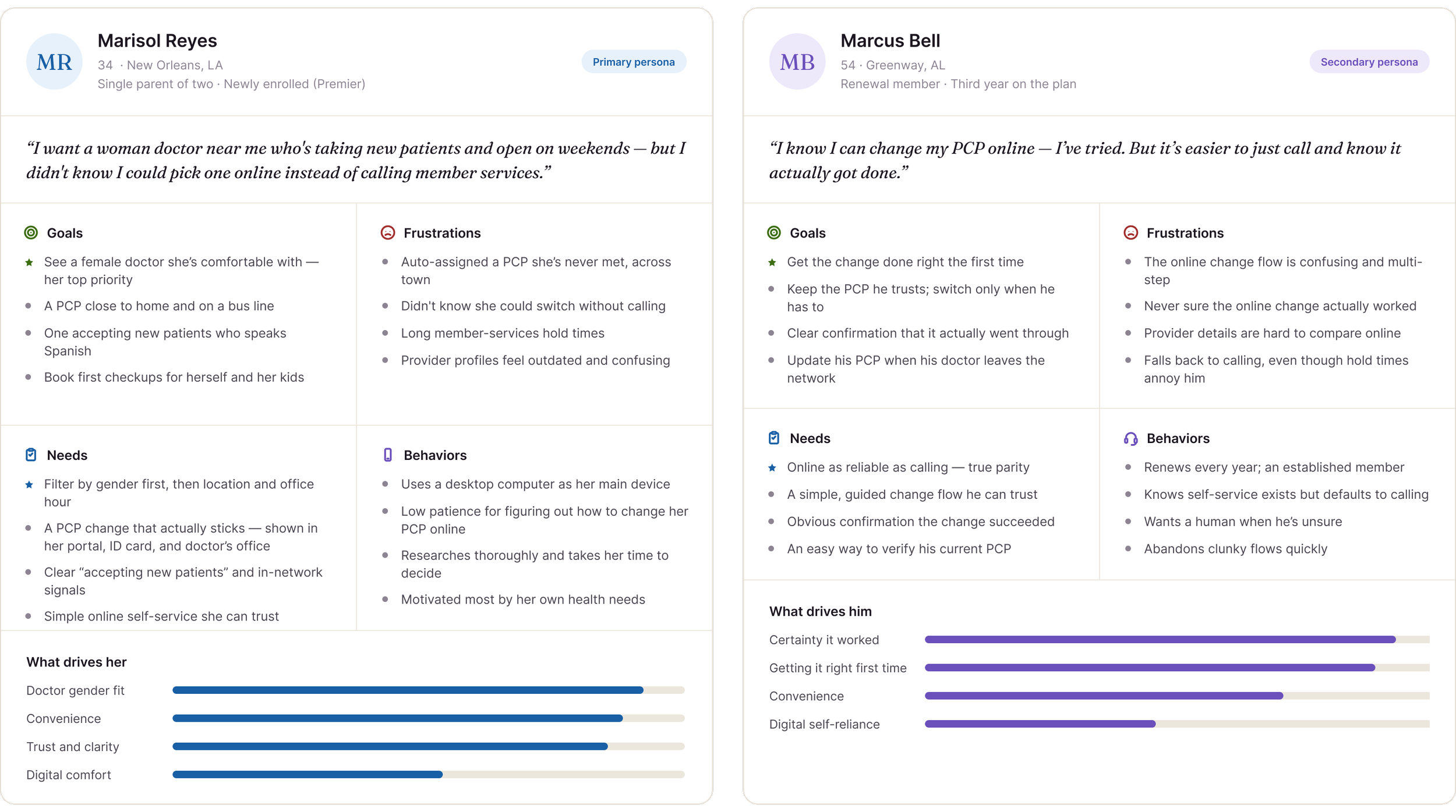
Scenario - New Members: New Member (Lisa): Lisa just joined the Ambetter health plan. Upon enrollment, she was automatically assigned a PCP based on her zip code. However, she wants a doctor who specializes in managing her chronic condition and prefers someone with good patient reviews nearby

Scenario - Renewing Members: Renewing Member (Max): Max has been with the insurance plan for 3 years. At renewal, his plan automatically assigned him a new PCP due to network changes. He hasn’t met or heard of this new doctor and feels uneasy about continuing care without a personal connection.


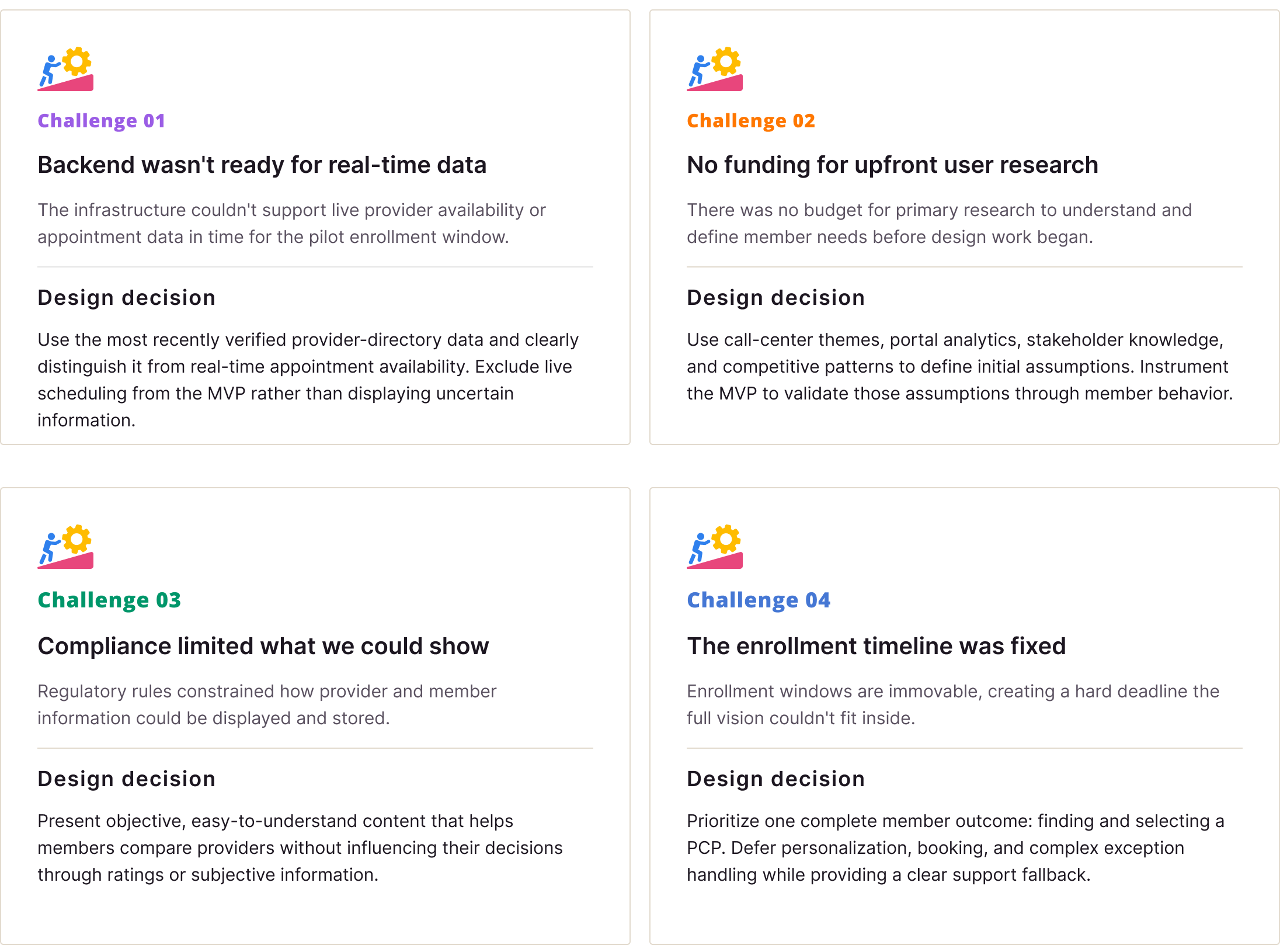
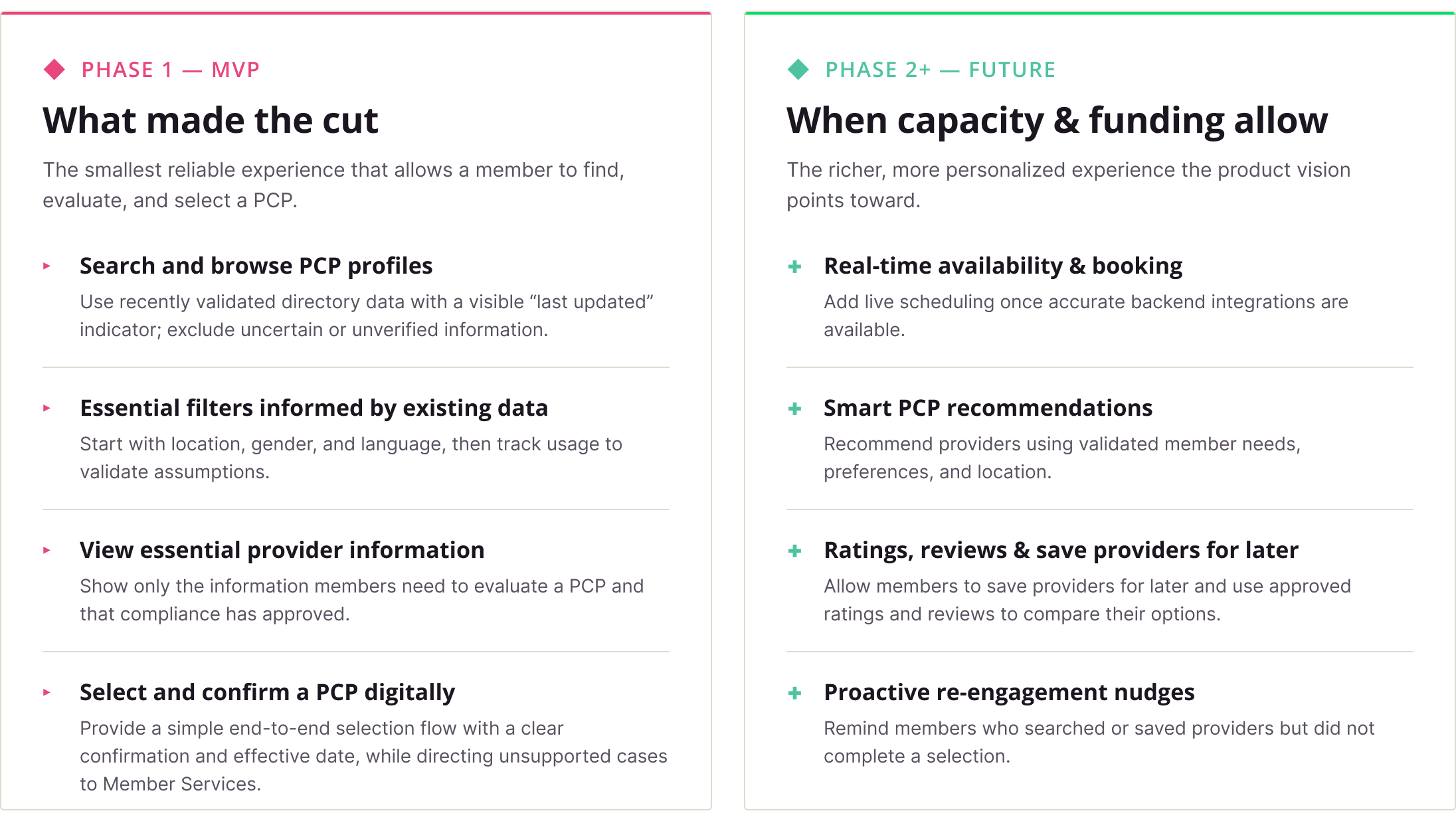
A brand-new experience rarely meets a system that's ready for it. Several real-world constraints shaped what the design could realistically deliver at launch. Rather than water the vision down, I treated each limit as a decision — scoping an MVP that protected member trust, and mapping the richer experience to later phases tied to engineering capacity and funding.





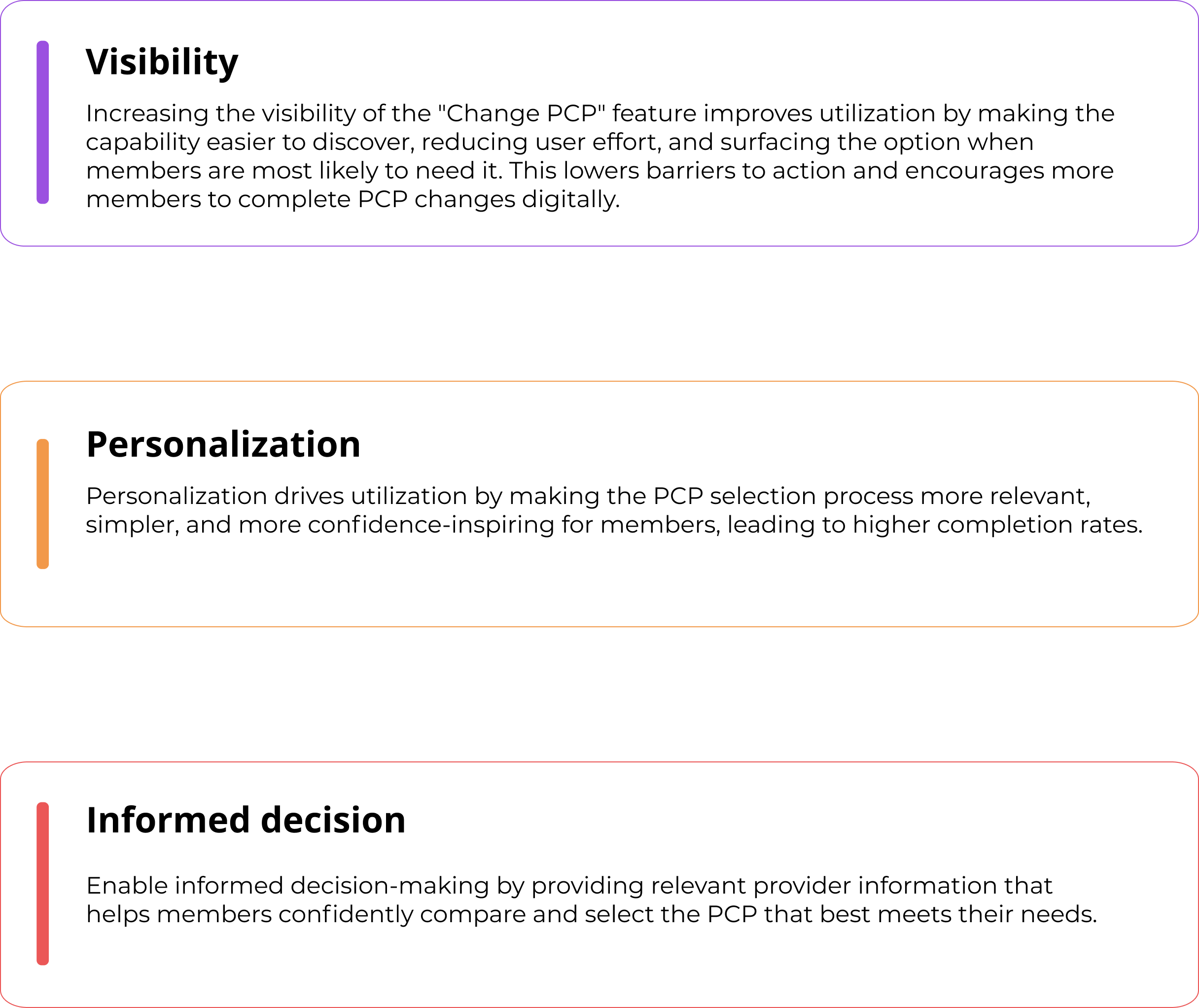
Visibility
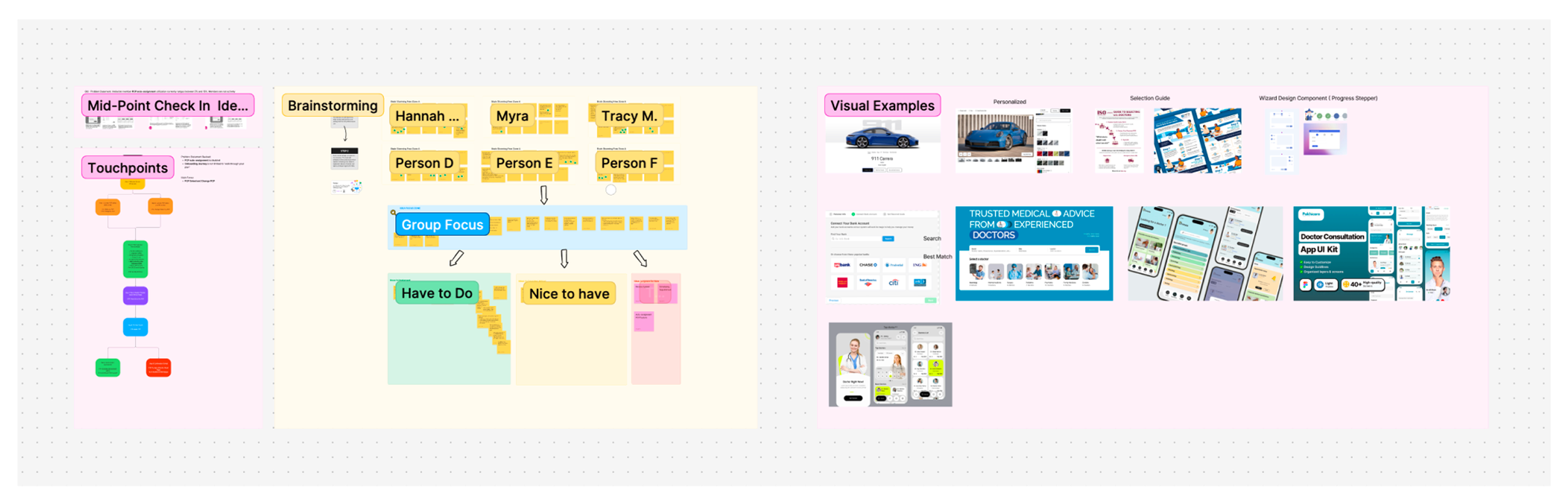
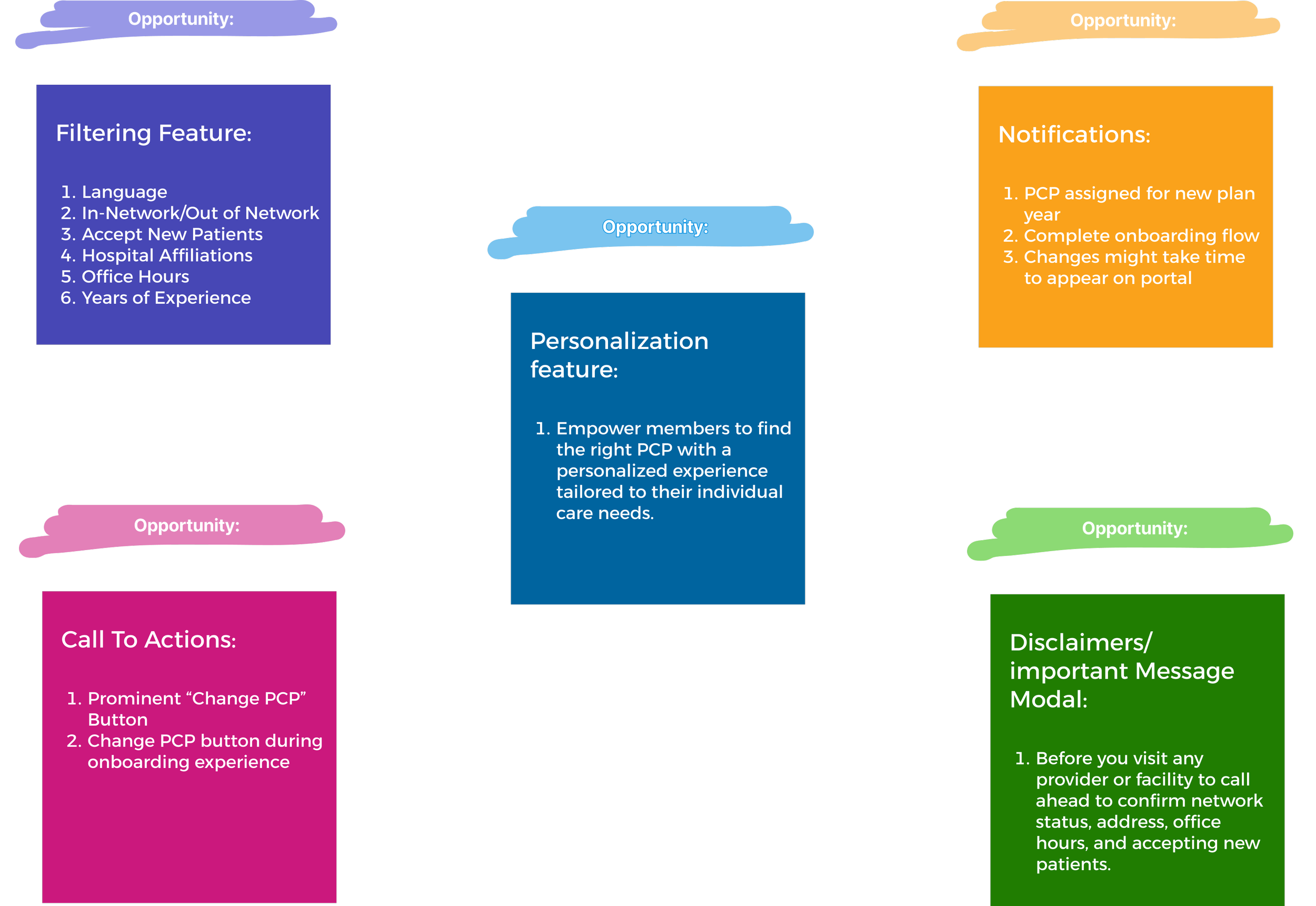
Increasing the visibility of the “Select/ Change PCP” feature during onboarding can encourage members to actively choose a primary care provider that best fits their needs.
Personalization
Deliver a personalized experience by guiding members through key questions about their care preferences. This helps to identify what matters most to them when choosing a provider, allowing us to proactively filter options and highlight top matches that best align with members’ individual needs.
Informed decision
Helping members understand why a provider is a top match and providing the information members need to make an informed PCP choice reduces uncertainty and increases confidence, leading to higher completion and utilization of the PCP selection feature.
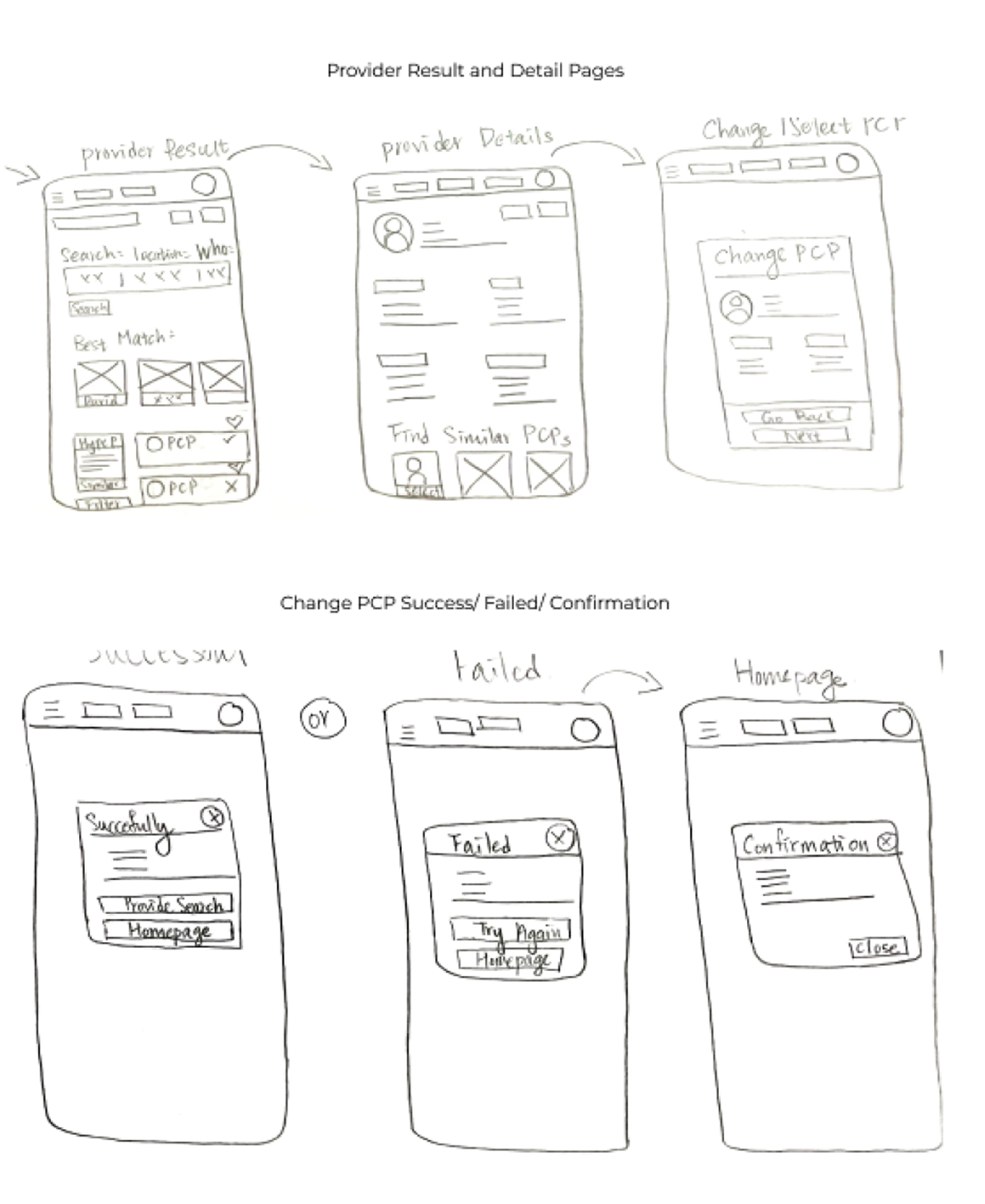
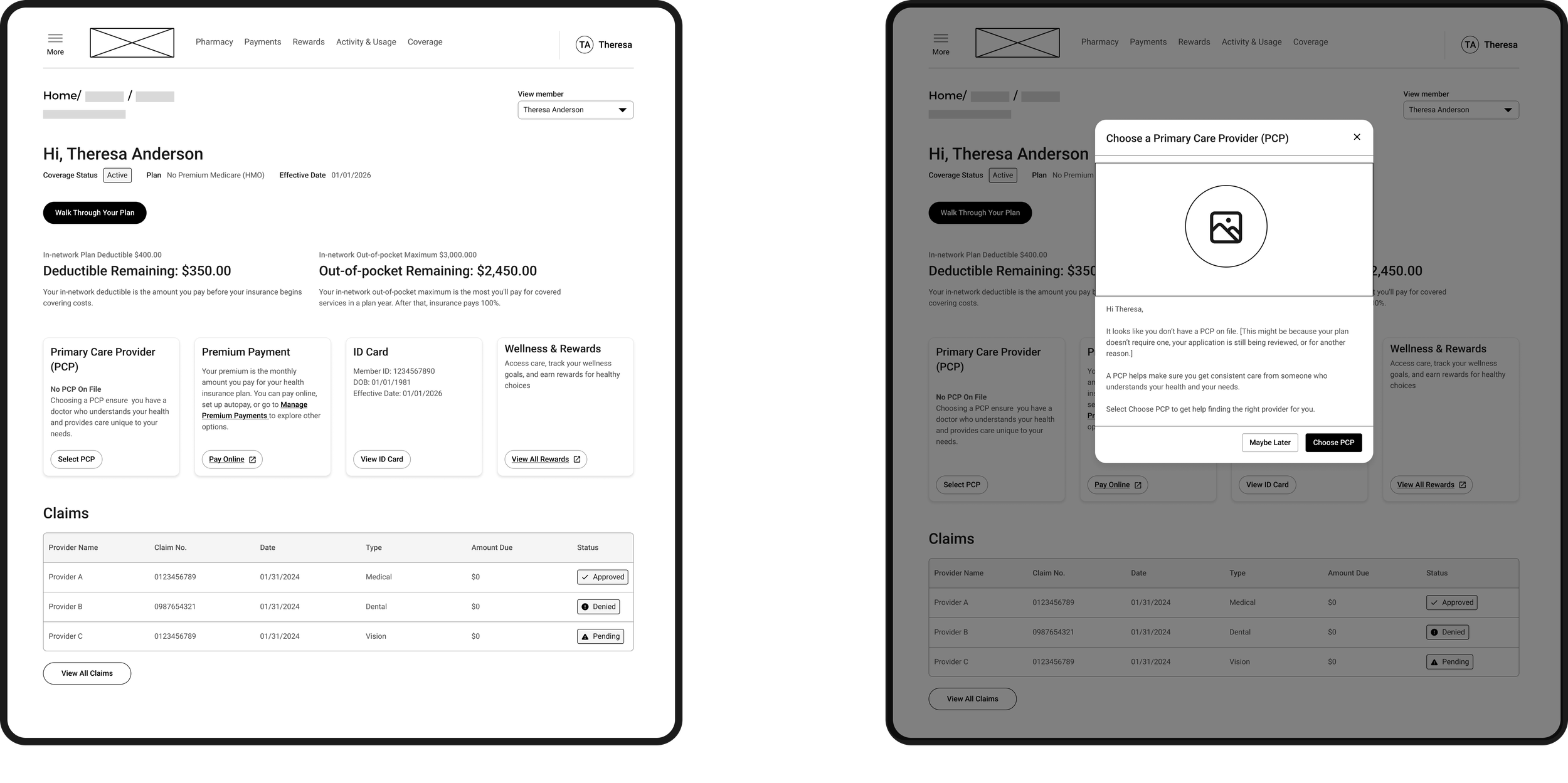
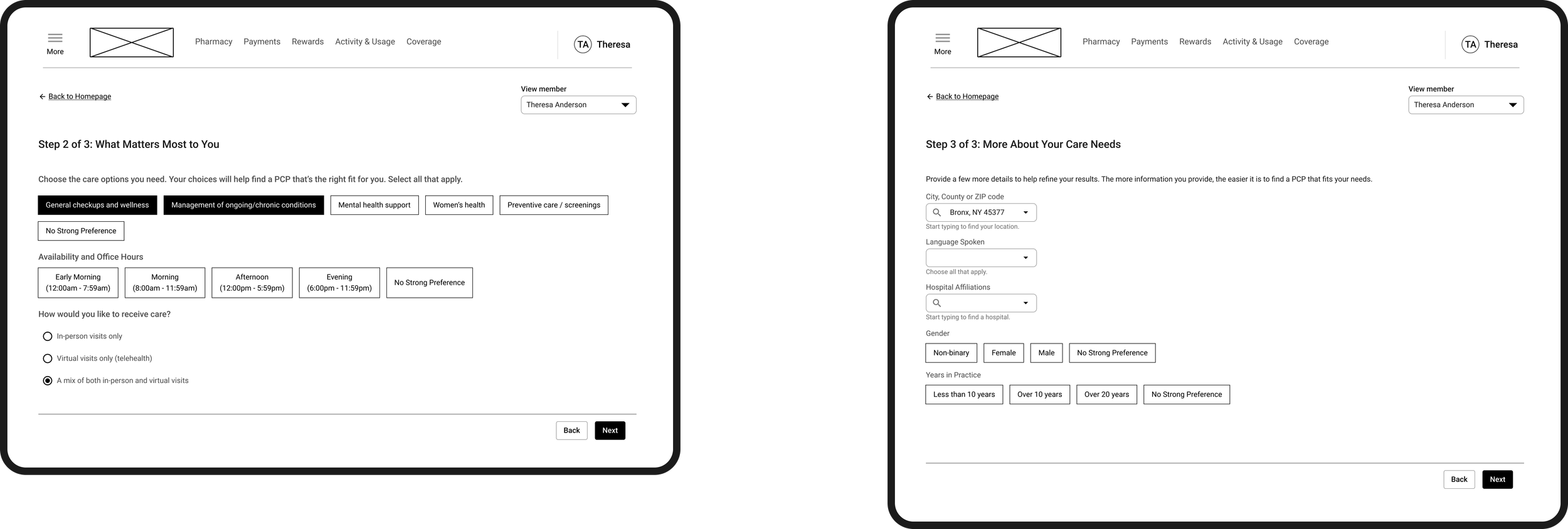
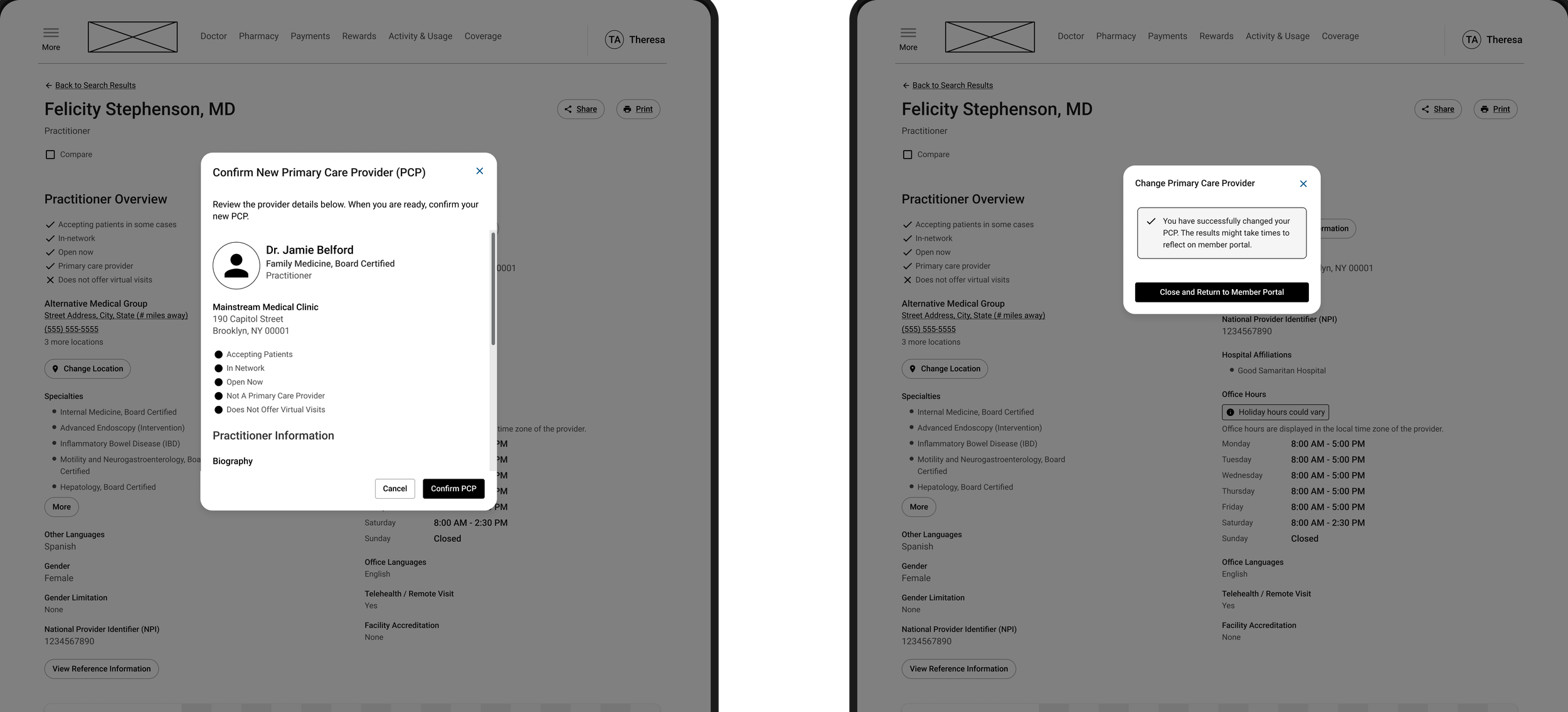

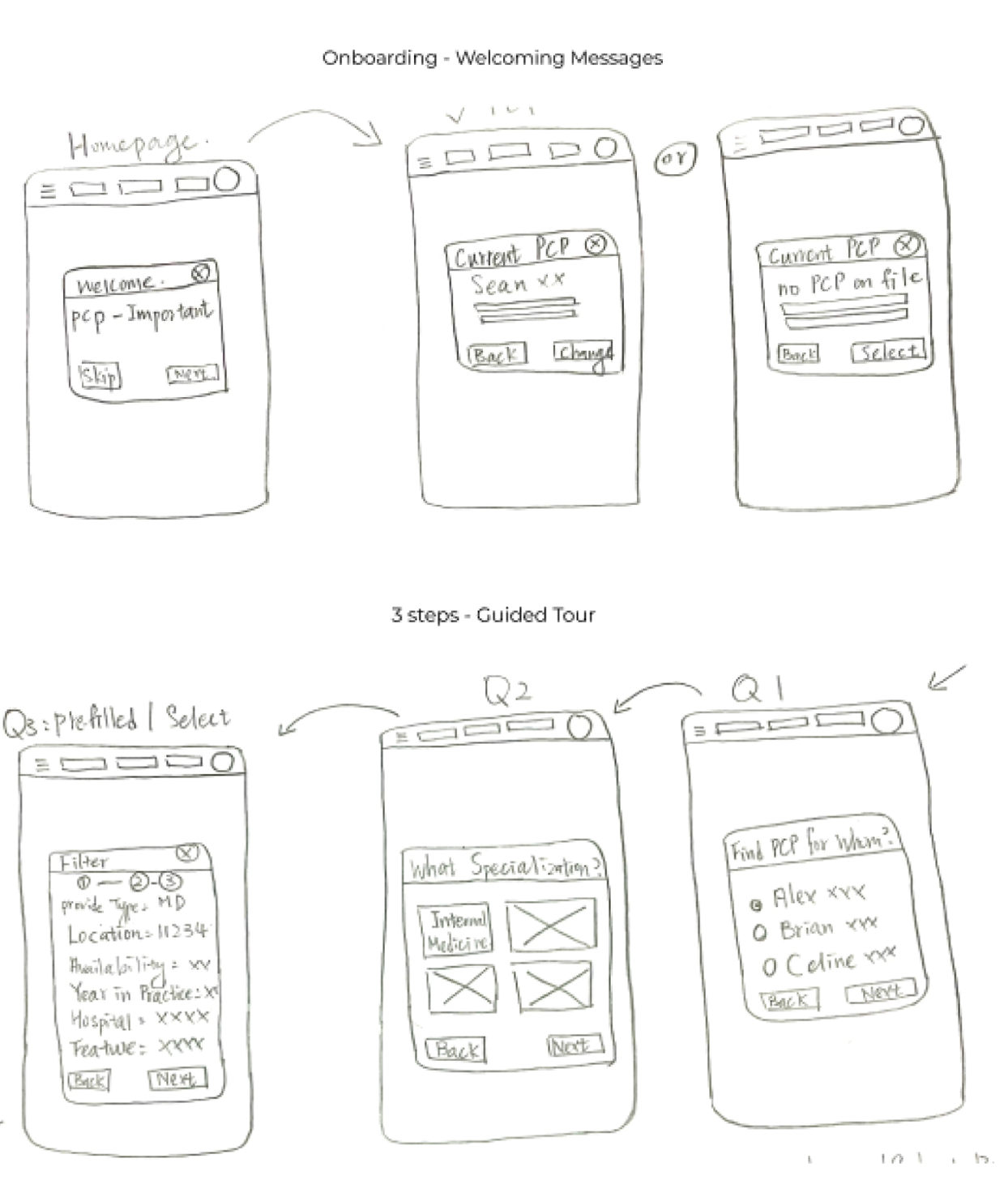
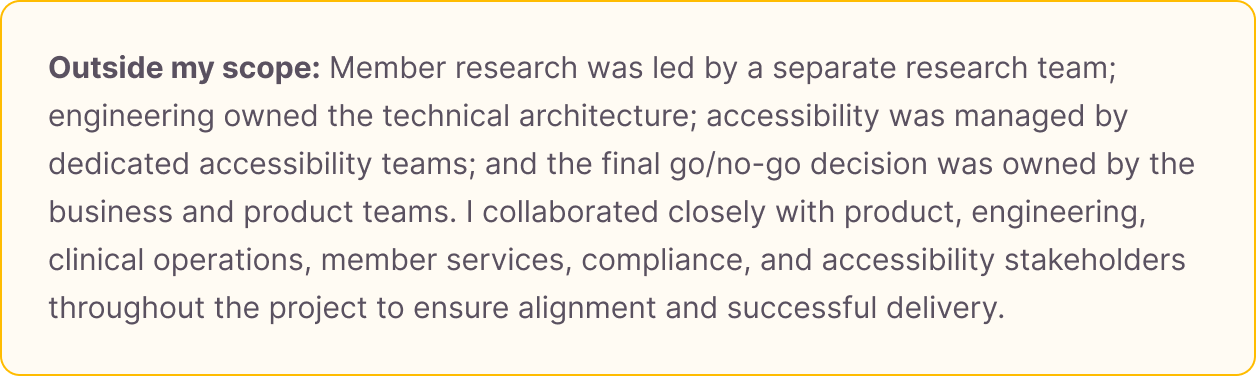
As the lead UX designer, I owned the experience end to end — turning a business problem into a human-centered design, then designing a brand-new self-service PCP selection flow from the ground up.

The low numbers pointed to a single missing thing: choice. Members had no voice in who their doctor was, and no easy way to fix it without picking up the phone. If members could select a PCP based on their own needs and preferences, they'd be far more likely to actually go — improving care, lowering cost, and deflecting the calls that came from forcing a default on them.

Executive Summary